The Cowboy Bathed In The Wrong River — The Apache Chief Said He Must Marry His Daughter
⏱️ 1 min read 25/08/2026 17:00
Beckett frowned.
“Internal affairs can handle—”
“I preside over cases involving your department.”
“Yes.”
“I know many of the investigators.”
“Yes.”
“I will not participate in selecting who investigates this.”
Marcus looked directly at him.
“I am the complainant.”
Beckett nodded slowly.
“I understand.”
“Good.”
Marcus glanced at the clock.
“I have twenty-seven cases.”
Marian stared at him.
“You're going back in?”
“Of course.”
“You were just arrested outside your courtroom.”
“And the people inside still have cases.”
He picked up the leather folder.
“My morning didn't cancel their legal problems.”
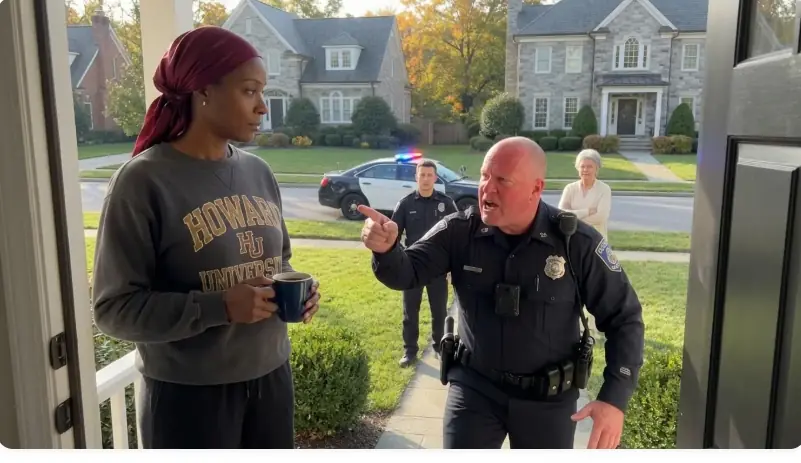
He returned to Courtroom 4B.
For the next four hours, Marcus did what judges were expected to do.
He listened.
He asked questions.
He reviewed evidence.
He ruled.
He sentenced a nineteen-year-old man to probation after reviewing treatment records.
He rejected an eviction petition because the landlord had failed to provide proper notice.
He denied one suppression motion.
Granted another.
He recessed twice.
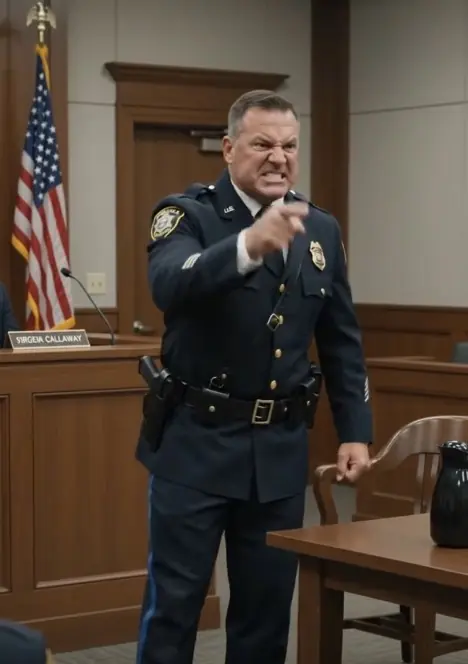
And he never mentioned Officer Rourke.
But every time Marcus moved his left hand, the red marks reminded him.
At lunch, he finally went home.
His wife, Elaine, was waiting.
Dr. Elaine Holloway was fifty-one and a cardiologist. She was calm in emergency rooms, decisive during surgeries, and almost impossible to intimidate.
She opened the door before Marcus reached it.
“I already heard.”
Marcus sighed.
“Of course you did.”
“Courthouses have faster gossip networks than hospitals.”
She stepped aside.
“Show me.”
Marcus held out his wrists.
Elaine examined them.
“Any numbness?”
“No.”
“Pain?”
“No.”
“Shoulder?”
“Fine.”
She looked up.
“Now the part you aren't answering.”
Marcus removed his jacket.
“I’m embarrassed.”
Elaine stopped.
“Why?”
“I should have handled it better.”
“How?”
Marcus didn't answer.
Elaine stepped closer.
“Should you have explained more clearly?”
He said nothing.
“Pointed at your name more persuasively?”
Still nothing.
“Asked Elena to provide additional proof?”
Marcus almost smiled.
Elaine's expression remained serious.
“Marcus.”
He looked at her.
“You stood in your own courthouse wearing the literal uniform of your office while standing beside a door with your name on it.”
She softened.
“If a man still refuses to see what is directly in front of him, that's not an explanation problem.”
Marcus sat.
Elaine sat opposite him.
“What bothered you most?”
He thought.
“The moment the courtroom doors opened.”
“When everyone stood?”
“Yes.”
“Why?”
Marcus stared at the floor.
“Because that's when he believed me.”
Elaine understood.
“Not when you said your name.”
“No.”
“Not when Elena confirmed it.”
“No.”
“Not when the chambers plaque was right there.”
“No.”
Marcus looked at her.
“He believed the room.”
Elaine was silent.
Marcus continued.
“The exact same man became credible because forty people stood up.”
Elaine reached across the table and took his hand.
“That hurts.”
Marcus nodded.
“It does.”
“Because you were a judge?”
“No.”
He shook his head.
“Because I was a person whose truth wasn't considered enough.”
That evening, Marcus barely slept.
He kept seeing the same sequence.
Rourke's hand on the robe.
The cuffs.
Elena saying “Judge.”
The brass plaque.
And then the courtroom.
Everyone standing.
It was that final image that stayed with him.
Not because the courtroom had rescued him.
But because it revealed something.
The law had not changed.
The facts had not changed.
Marcus had not changed.
Only the perception of the person looking at him had changed.
And Marcus knew enough about systems to understand that individual prejudice rarely stayed individual for long.
If no one examined it, it became procedure.
If procedure went unchallenged, it became culture.
And if culture went unmeasured, people began calling it normal.
The next morning, Marcus decided he would not let his experience become an isolated story.
But he also knew he could not turn himself into the prosecutor of the man who had arrested him.
If he did, the story would become about revenge.
Marcus wanted something else.
He wanted answers.
The investigation began formally the next morning.
The state bureau's Professional Standards Division was assigned to review the incident.
The lead investigator was Lydia Shaw.
She was forty-four, sharp-eyed, methodical, and famously resistant to dramatic conclusions.
Marcus appreciated that.
She met him in a conference room with a recorder between them.
“Judge Holloway, before we begin, I need to remind you that you are a witness.”
“I understand.”
“You should answer only what you personally observed.”
“Understood.”
“Do you believe Officer Rourke arrested you because you are Black?”
Marcus paused.
“I believe race is relevant.”
Shaw waited.
“How?”
“He repeatedly rejected information that would ordinarily reduce suspicion.”
“Do you believe that was racial bias?”
Marcus looked at her.
“I believe the investigation should determine whether similar patterns exist.”
“You're avoiding saying yes.”
“I am avoiding pretending I know what exists inside another man's head.”
Shaw nodded.
“But you don't need access to someone's private thoughts to evaluate conduct.”
Marcus leaned back.
“No.”
That answer stayed in the report.
The body-camera footage was reviewed first.
The video showed everything.
Rourke's first laugh.
The word “costume.”
Marcus identifying himself.
Elena confirming it.
The chambers sign visible behind them.
Rourke grabbing the robe.
Marcus telling him to remove his hand.
The handcuffs.
The statement:
“Not feeling so important now, are you?”
Then the courtroom doors opened.
Everyone stood.
Rourke's expression changed instantly.
The investigators watched the footage several times.
Each time, something became clearer.
Rourke had been given opportunities to verify Marcus's identity.
He ignored them.
Not once.
Repeatedly.
That distinction became central.
Then the investigators requested Rourke's previous complaints.
There were seven.
The first involved Andrea Collins, a Black attorney.
Fourteen months earlier, Andrea had been stopped outside a courtroom.
She was wearing a navy suit and carrying a litigation bag.
A white male attorney was walking beside her.
Rourke stopped Andrea.
Not him.
She showed her bar identification.
Rourke demanded a driver's license.
Andrea asked why her colleague wasn't required to show one.
The other attorney voluntarily offered his identification.
Rourke waved him through.
Andrea filed a formal complaint.
The finding:
Communication issue. No discipline.
The second complaint involved Terrence Blake, a Black court interpreter.
Rourke stopped him near an employee entrance.
Terrence showed his courthouse identification.
Rourke questioned whether the badge was genuine.
Terrence complained.
The finding:
Officer acted cautiously. No discipline.
The third involved a Latino process server carrying county credentials.
Rourke questioned him for seventeen minutes.
The finding:
No policy violation.
The fourth involved a Black law student accompanying a public defender.
Rourke escorted him from a secured hallway after telling him he “looked lost.”
The finding:
Miscommunication.
The fifth involved an elderly white man.
7 Part