"You know," she said, her voice soft as she folded the blackberries into the batter. "I didn't always want to be in this kitchen. When I was your age, I had a scholarship to go to nursing school in Chicago. I had my bags packed."
I stopped sifting. "You did? Why didn't you go?"
Evelyn sat down at the small, linoleum-topped table and gestured for me to do the same. "My father got sick, and my mother couldn't run the farm and care for my younger brothers alone. I had to choose. In 1954, loyalty wasn't a word you put on a screen; it was a weight you carried."
She looked out the window at the rows of corn in the distance. "I spent many years in this kitchen feeling like the world was passing me by. I thought if I didn't get to the city, my life wouldn't count for much. But then I realized that while I wasn't nursing strangers in Chicago, I was nourishing a family here. This kitchen became my way of speaking when I didn't have the words to tell your grandfather or your mother how much I loved them."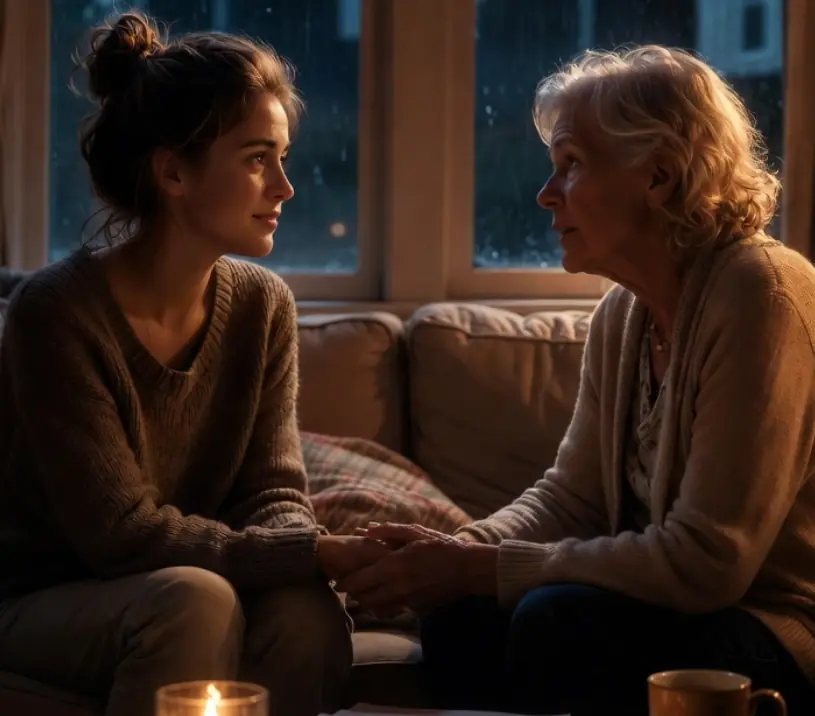
I looked at her, really looked at her, for the first time in years. I had seen her "traditionalism" as a lack of ambition. I hadn't realized it was a hard-won peace. I hadn't seen the sacrifice behind the sourdough or the resilience behind the blackberry jam.