Caleb’s mouth opened, then shut. His cheeks had gone chalk-white. “Your Honor, I—”
The judge lifted a hand. “Do not,” he said sharply. “I heard you. I watched you.”
Caleb’s attorney tried again. “Your Honor, we need to authenticate—”
“We will,” the judge said. “And while we do, I’m issuing a temporary order effective immediately.”
My heart pounded. “What order?” my attorney whispered.
The judge’s gaze stayed fixed on Caleb. “Temporary primary custody to the mother,” he said. “Supervised visitation only for the father until further review.”
Caleb jolted upright. “That’s insane!”
The judge’s eyes narrowed. “What’s insane,” he said, “is using a ten-year-old as leverage.”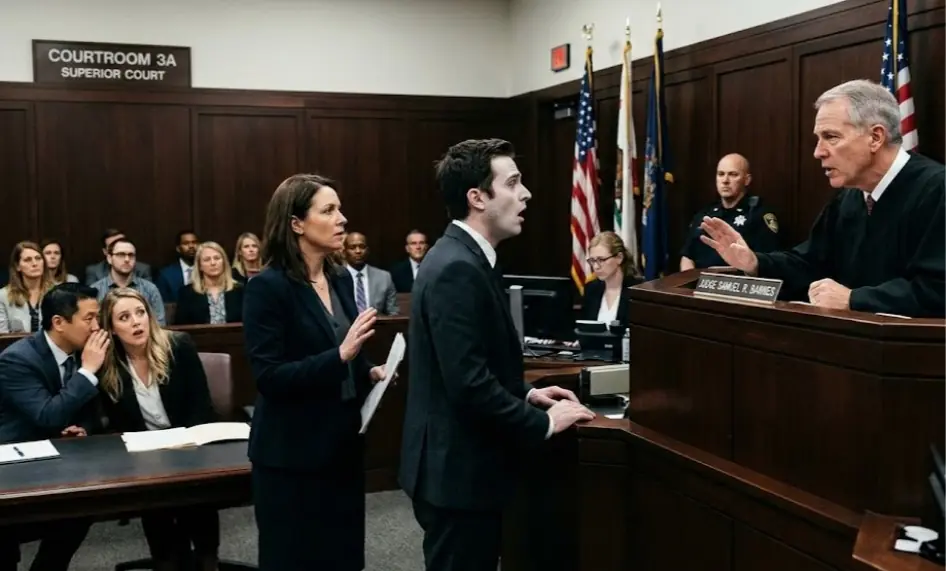
I turned toward Harper, tears burning. She was shaking, but her chin was lifted, like she’d just carried something too heavy for too long and finally set it down.
Then Harper looked at me—not triumphant, not angry.
Just tired.
And she mouthed, silently:
“I’m sorry, Mom.”
That broke me.
Because my daughter had been protecting me while I thought I was protecting her.
The judge called a short recess, and suddenly the courtroom exploded into motion—attorneys huddling, the bailiff guiding people back, Caleb’s lawyer whispering urgently into his ear.
Harper returned to her seat beside me and stared at her sneakers. Her hands were shaking so hard she tried to hide them under her thighs.
I leaned close, careful not to overwhelm her. “Harper,” I whispered, “you don’t have to apologize. Not for telling the truth.”
Her lip trembled. “I didn’t want Dad to be mad,” she whispered. “But I didn’t want you to lose me.”