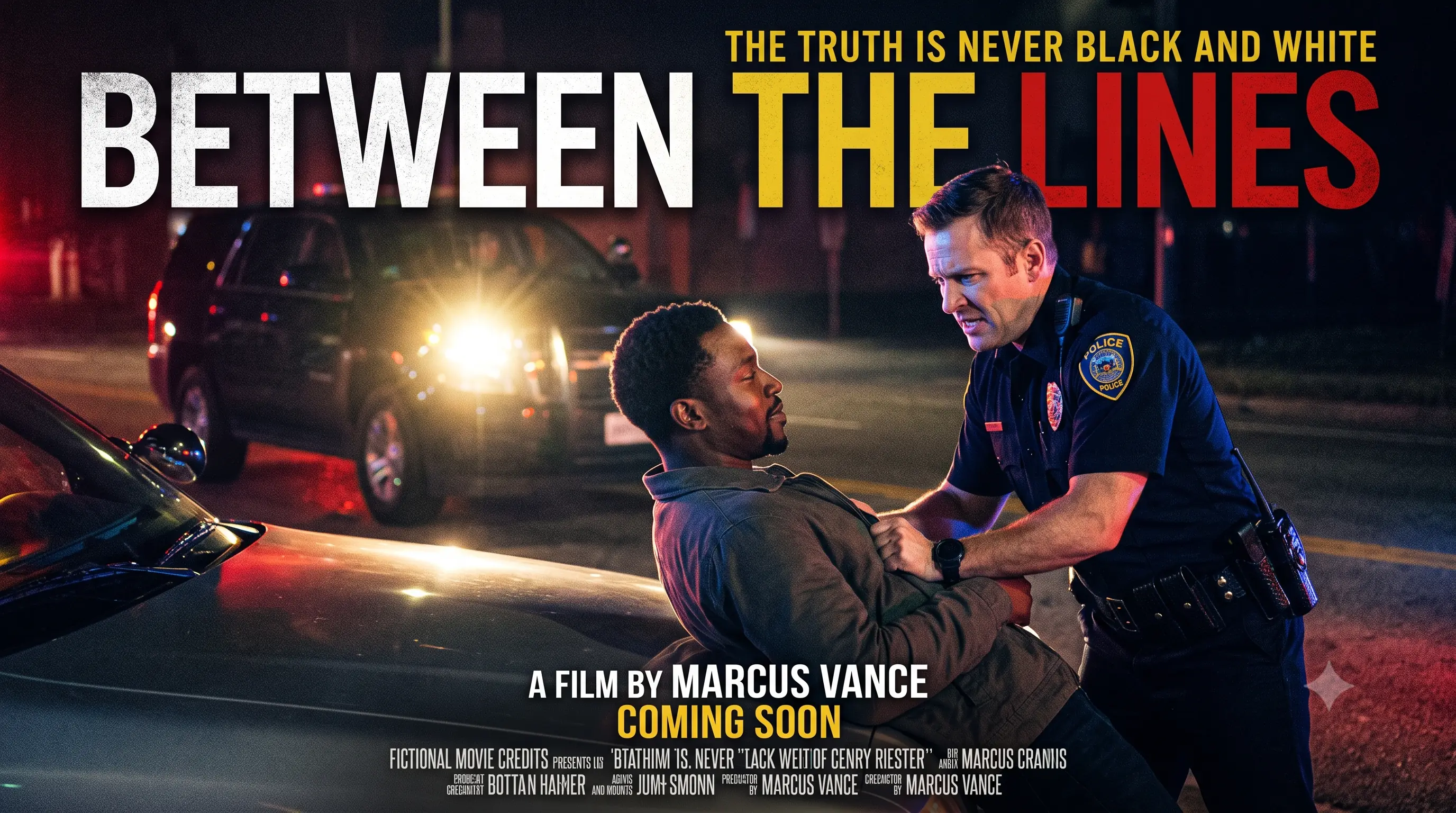
The Virginia Cop Ignored My Federal Credentials — The Roadside Incident
The vibration beneath the cruiser wasn't thunder. I knew that because thunder never came with a sequence of radio acknowledgments in my right ear.
“Echo One, respond.”
I bent my head toward my shoulder, trying to press the concealed microphone's emergency switch against the seat belt latch. The effort sent a sharp ache through my cuffed wrists. Nothing happened.
Officer Mitchell watched me in the rearview mirror. “Sit still.”
“Listen carefully,” I told him. “A protected federal movement is approaching this section of highway. You need to notify your dispatcher that your cruiser is blocking an active route.”
He laughed. “Now you're protecting the president?”
“I am trying to prevent an avoidable emergency.”
“Sure you are.”
His computer chimed. He leaned forward, read the screen, and frowned. He tapped the keyboard again. The result was unchanged. The registration was restricted, and the system instructed him to contact a designated federal liaison. He interpreted the instruction as a challenge.
“Fake plates,” he said. “That explains a lot.”
I looked past his shoulder. My Charger stood on the shoulder with its driver-side door partly open. Mitchell had parked behind it at an angle that pushed the rear of his cruiser into the travel lane. Any vehicle coming around the bend would have limited room to maneuver. That was the immediate danger, regardless of who I was.
“Move your car completely onto the shoulder,” I said. “Please.”
He turned and raised his flashlight again. “You don't give orders from my back seat.”
The dispatcher broke through his radio. “Unit Twelve, confirm your location and status. We have an urgent call from state operations regarding a restricted vehicle query.”
Mitchell held the microphone near his mouth. “I'm at mile marker forty-six. One detained male. Possibly stolen government vehicle.”
“Unit Twelve, do not take further enforcement action until you speak to the supervisor on the line.”
“Negative. I've got it under control.”
He released the microphone before she could answer.
I had worked enough long nights to recognize that particular kind of mistake: a man deciding that every piece of information contradicting his first assumption must be another reason to distrust the person in front of him.
A soft tone sounded in my earpiece. Then a familiar voice, steadier than the dispatcher, said, “Echo One, this is Mercer. If you can hear me, maintain position. We have your last location.”
Special Agent Rebecca Mercer led the motorcade's protective operations that night. She was not related to the officer in the cruiser. She was a careful, unsentimental professional who had once stopped a major movement over an unconfirmed delivery truck. People had complained about the delay. She had asked them whether they preferred inconvenience or uncertainty.
I couldn't answer her.
A second set of lights appeared far down the road. They did not belong to the motorcade. A Virginia State Police SUV came over the rise, slowed, and pulled off ahead of my Charger. A trooper stepped out with a reflective vest over his uniform.
Mitchell swore under his breath. “Who called them?”
The trooper approached the passenger side, stopping far enough away to see both Mitchell's hands and mine. “Evening. I'm Sergeant Elaine Foster. State operations asked me to check a restricted-plate stop.”
“Routine traffic enforcement,” Mitchell said.
Foster looked at the computer. “That isn't a routine return.”
“He was speeding.”
“Then why is his car half in the lane and your cruiser farther into it?”
Mitchell bristled. “I was handling an uncooperative subject.”
Foster leaned to see me through the partition. “Sir, can you identify yourself?”
“My name is Adrian Cole. I'm a federal protective agent. My credentials are inside my jacket, left breast pocket. I have been asking this officer to verify them.”
“Don't listen to him,” Mitchell said.
Foster didn't look away from me. “Do you need medical attention?”
“My wrists need checking. More urgently, your cars need to clear the lane. An authorized federal movement is approaching.”
She took one step back and spoke into her radio. I couldn't hear every word, but I caught the phrases “hold traffic” and “confirm route status.”
Mitchell climbed out, furious. “You're making this into something it isn't.”
“I'm establishing what it is,” Foster replied. “Move your cruiser onto the shoulder. Now.”
He hesitated. That hesitation was enough for her to repeat the order, this time with the authority of a supervisor responsible for the highway itself.
The first escort vehicles became visible beyond the trees. They slowed rather than accelerating into the obstruction. Somewhere ahead, another unit had already established a safe holding point. Rebecca had made the correct decision: the motorcade would wait until the roadway was secure.
It would later be reported that the presidential convoy had nearly struck the cruiser. That wasn't true. The advance team had identified the problem in time. The danger was real, but the system designed to manage it had worked despite my inability to respond.
Foster returned to the rear door. “Officer Mitchell, open it.”