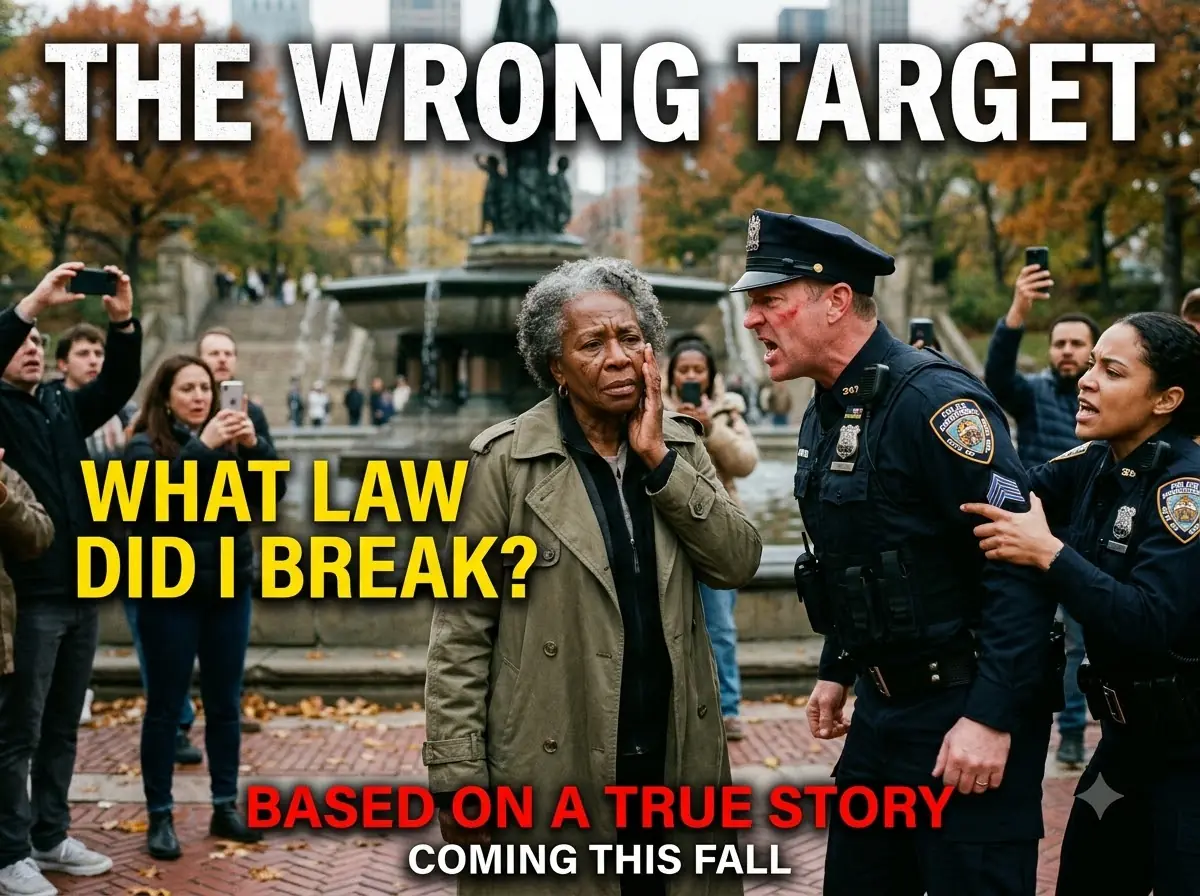
The morning came in gray and quiet, the kind of cold that settles deep into stone benches and empty paper coffee cups left behind on concrete ledges. Frost clung to the edges of the brass fountain in the center of Metro Park, while gold and rust-colored autumn leaves drifted across the gravel paths in slow, erratic spirals. Early joggers moved through the chill with their breath fogging before them, barely sparing a glance at the woman sitting on the third bench from the water. She was wrapped in an oversized charcoal coat that swallowed her slender frame. Across her knees rested a worn leather notebook, its spine cracked from years of constant handling, and beneath her collar hid a delicate silver chain.
Nobody in the park knew her name. Nobody passing by could have guessed that within thirty minutes, armored federal vehicles would tear through the quiet surrounding streets, sirens silent but strobes flashing, converging on that exact fountain to destroy one officer’s career and expose a secret three years in the making. To the city, she was just another invisible soul on a park bench, someone forgotten, someone the world had decided not to see. Her name was Zariah Monroe. She was thirty-four years old, though the dark shadows beneath her sharp eyes and the deliberate stillness of her posture made her look both younger and far older all at once.
Every single day, Zariah wrote in her notebook with small, meticulous script. Passersby assumed she was unraveling, that her constant scribbling was the mark of a broken mind, and they gave her a wide berth. What they didn't know was that she wasn't writing gibberish. She was recording precise data: every transaction of kindness and cruelty that occurred in the park. She logged the exact times the maintenance crews slacked off, the exact hour a teenager mocked an elderly man, and every handoff that occurred between sketchy figures near the tree line. She was building an archive with a purpose known only to her.
Leonard Price, who ran the coffee cart near the north entrance, was the closest thing Zariah had to a friend. For twenty-two years, Leonard had pushed his cart to that same spot. Every morning at 7:00 AM, he brought Zariah a cup of hot black coffee—no charge, no questions asked—setting it gently on the bench beside her. He had noticed things others missed: her refined posture, her flawless, measured diction when she spoke, and the fact that she never begged for a single cent. She never asked for money, never held out a cup, and always offered a slight, respectful nod whenever someone showed her courtesy.
Once, when a tourist dropped her wallet and map in a sudden gust of wind, Zariah had calmly given her exact, turn-by-turn directions to the federal courthouse six blocks over with the precision of a seasoned city navigator. Leonard kept those observations to himself. In his experience, people who lived with deep scars rarely wanted to explain how they got them.
That cold morning, a patrol cruiser turned slowly onto the access road along the park's northern edge. Behind the wheel sat Officer Travis Boon, an eleven-year veteran with a reputation for aggressive policing and an ironclad belief that anyone without a permanent address was a threat waiting to happen. Travis had built his record on field stops, aggressive dispersals, and petty arrests that kept his monthly quota inflated. His superiors routinely ignored his heavy-handed tactics because his numbers made the precinct look proactive.
Beside him sat Officer Melissa Crane, a thirty-eight-year-old partner who was far more observant and far more cautious. She had ridden with Travis for a year and knew how to read the sudden tight clenching of his jaw. She didn't share his hostility toward the park's unhoused population, but she had never summoned the courage to openly stop him either.