in advance, and who made sure his registration and insurance were immaculate.
It was a Thursday night in late March when the routine was violently shattered. The air
was crisp, carrying the last biting remnants of winter. Marcus was on his way to the
gymnasium, driving alone, listening to the hum of the engine and the soft murmur of the
radio. He passed the old textile mill, maintaining a steady forty-five miles per hour. As he
rounded the bend, the darkness behind him suddenly erupted into a blinding strobe of red
and blue. The lights reflected in his rearview mirror, harsh and urgent. Marcus felt a
momentary flutter of confusion, followed by the dull, sinking apprehension that every
Black man in America learns to carry as a dormant reflex. He checked his speedometer.
Forty-five. He checked his lights. On. He signaled carefully and pulled his Honda onto the
gravel shoulder, shifting into park and turning off the radio.
He rolled down his window and placed both hands firmly at ten and two on the steering
wheel, a posture of absolute compliance. He watched the side mirror as a figure detached
itself from the cruiser and walked deliberately toward him. The beam of a heavy Maglite
swept over the trunk, illuminated the interior of the Honda, and finally settled directly into
Marcus's eyes, blinding him. He squinted against the glare.
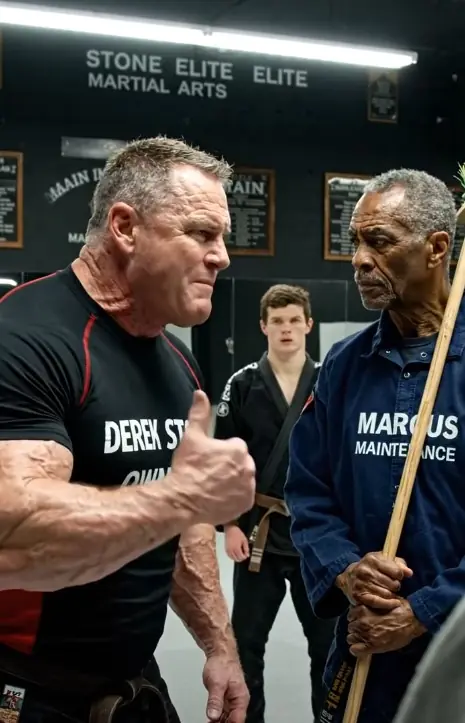
"License and registration," the voice demanded. It was Sergeant Derek Callaway. The
name tag was a silver blur behind the intense light.
"Good evening, officer," Marcus said, his voice calm, respectful. "They are in my wallet, in
my back pocket. I am going to reach for them now."
Callaway didn't respond, merely keeping the light trained on Marcus's face. Marcus
retrieved the documents and handed them out the window. Callaway took them, examined
them for an agonizingly long minute, and then leaned down, resting his forearms on the
window sill. The smell of peppermint gum and stale coffee wafted into the car.
"You were swerving back there, Marcus," Callaway said, his tone conversational, almost
friendly in a deeply unsettling way. "Crossed the double yellow line twice. That's reckless
driving."
Marcus felt a cold knot form in his stomach. "With respect, sir, I haven't crossed any
lines. I was holding steady at forty-five."
Callaway sighed, a theatrical expression of disappointment. "See, now you're making this
difficult. I don't want to make this difficult. An older gentleman like yourself, you don't need
the hassle of a court date. You don't need points on this pristine license. I can write this up,
have your car impounded while we verify your sobriety, or... we can take care of this right
now. An on-the-spot processing fee. Sixty dollars, cash, and I forget I saw you swerve."
The demand hung in the air, heavy and undeniable. Marcus stared at the officer, the
reality of the situation clicking into place. He had heard the rumors, the hushed
conversations in the barbershops and community center about the cop on Route 9 who
shook people down. But hearing it was one thing; experiencing it was a profound violation.
Marcus was a proud man. He had played by the rules his entire life. Furthermore, he simply
didn't have the cash. He had ten dollars in his wallet, maybe some loose change in the
console.
"Officer," Marcus said, keeping his voice as steady as possible, though a tremor of
indignation was beginning to surface. "I don't have sixty dollars in cash on me. If you
believe I have committed a traffic violation, please write the citation. I will pay the proper
fine through the court system, or at the station."
The atmosphere shifted instantly. The faux friendliness vanished from Callaway's
posture. He stood up straight, his hand dropping to his utility belt. The rejection was an
affront to his authority, a disruption of his perfectly ordered system.
"Step out of the vehicle," Callaway barked, his voice cracking like a whip in the silent
night.
"Sir, I just—"
"I said step out of the goddamn vehicle!" Callaway roared, yanking the door handle. It
was locked. "Unlock the door and step out, now!"
Marcus unlocked the door and pushed it open. Before he could fully plant his feet on the
gravel, Callaway grabbed his left arm with terrifying force. The older man was yanked from
the driver's seat, stumbling forward. He cried out in surprise and pain as Callaway violently
twisted his arm behind his back and slammed him face-first onto the cold hood of the
Honda.
"What are you doing?!" Marcus gasped, his cheek pressed against the metal, his shoulder
screaming in agony. "I'm not resisting!"
"Stop resisting!" Callaway yelled, though Marcus was doing nothing but trying to
maintain his balance. The heavy metal cuffs ratcheted around Marcus's wrists, biting
sharply into his skin. He was shoved against the side of the car, patted down roughly, and
then dragged toward the back seat of the cruiser. As he was pushed into the plastic molded
seat, the door slamming shut behind him, Marcus looked out the window at the dark,
indifferent trees. He was sixty-two years old, a retired civil servant, a grandfather on his
way to a basketball game, and he was under arrest. There had been no crime, no violation,
no evidence. There was only a man with a badge, a dark road, and a terrifying realization
that the truth no longer mattered.
The justice system in Ridgemont operated with the smooth, relentless efficiency of a meat
grinder, particularly when a police officer's word was the primary ingredient. Marcus
Redmond's court date arrived three weeks after the incident on Route 9. He wore his best
suit, a charcoal two-piece he usually reserved for funerals and Sunday service. He sat in the
defendant's chair, his hands folded tightly in his lap, waiting for logic and reason to prevail.
He still harbored a naive belief that a judge would look at his clean record, hear his side of
the story, and recognize the absurdity of the charges against him: Reckless Driving and
Resisting Arrest.
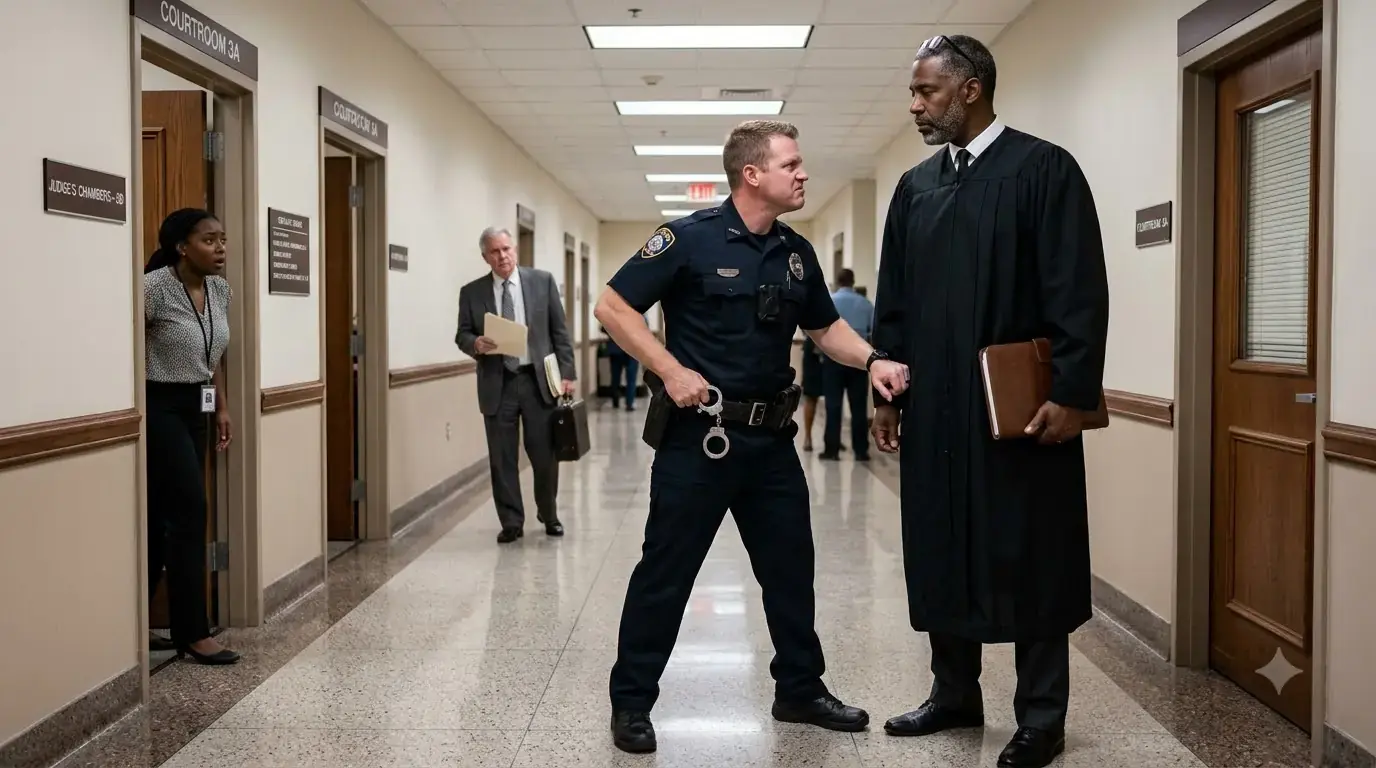
Sergeant Derek Callaway took the stand with the practiced grace of a man who owned
the room. He wore his Class A uniform, every button polished, every crease razor-sharp. He
spoke clearly, maintaining respectful eye contact with Judge Harrison, a man with whom
Callaway frequently played golf at the county club. Callaway's testimony was a masterclass
in fabricated procedural perfection. He described observing Marcus's vehicle swerving
violently across the median. He described a routine traffic stop that escalated when the