PART2 The HOA Declared My Garage Illegal — They Had No Idea I Had the Original Records
⏱️ 1 min read 25/08/2026 18:58
If the HOA owned the land, where was the deed?
If the project was for the community, why was Marla connected to the company receiving hundreds of thousands of dollars?
Marla had spent years controlling the narrative.
Now the evidence was controlling it for her.
And there was nothing she could do.
The trial began months later.
The courtroom was packed.
Residents from Silver Ridge filled the benches.
Some supported Grant.
Some were embarrassed that they had ever supported Marla.
A few simply wanted to understand how the situation had become so extreme.
Marla entered the courtroom wearing the same confident expression she had worn for years.
She looked toward the gallery.
Then toward Grant.
For a moment, she smiled.
It was the old smile.
The one that used to make people nervous.
Grant did not react.
Tessa began with the simplest fact.
Ownership.
She presented the county records.
Grant owned the land.
The HOA did not.
Then came the maps.
The association boundary ended hundreds of feet away.
The shared road did not change ownership.
The HOA had no authority to demolish anything on Grant's property.
Next came the inspection report.
Tessa called the engineer whose name appeared on the document.
He testified that he had never visited the property.
He had never written the report.
He had never signed it.
The courtroom became quiet.
The emergency authorization came next.
The county official testified that the reference number was invalid.
The authorization had never been issued.
Then came the forged contract.
A handwriting expert explained the inconsistencies.
Grant's father had never signed it.
The contract had been fabricated.
Piece by piece, Marla's story collapsed.
But the most powerful testimony came from Wade.
He explained how Marla had instructed him.
How she had pressured him.
How she had promised additional money.
And how she had told him to remove everything.
The prosecutor asked:
"Did Ms. Vass ever say why?"
Wade looked toward Marla.
"She said the owner was a problem."
"What else?"
"She said he always fought."
"And?"
"She said that's why they needed to remove the problem before he realized what happened."
A murmur moved through the courtroom.
Then Tessa played the security footage.
Marla appeared on the screen.
Standing beside the demolition equipment.
Ordering the workers.
"Remove everything."
The recording continued.
"Make sure nothing remains that can be restored."
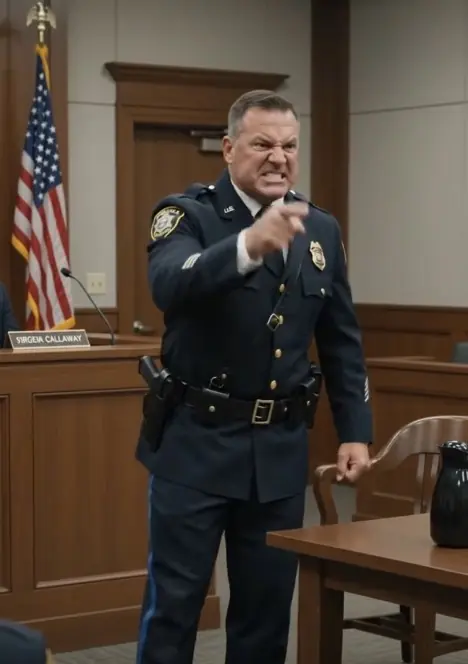
Marla's attorney objected.
The judge allowed the evidence.
The courtroom watched.
No one spoke.
Then came the financial records.
Summit Crest Consulting.
The trust.
The payments.
The projected revenue.
Fourteen million dollars.
Tessa turned toward the judge.
"The evidence demonstrates that the demolition was not an emergency action."
"It was part of a financial plan."
"The defendant wanted the property cleared so that a development could proceed."
The prosecutor added:
"And she intended to profit from that development."
The courtroom became silent again.
When Grant took the stand, he did not speak about Marla.
He spoke about the land.
He described his family's history.
His great-great-great-grandfather rebuilding the original farmhouse after the Civil War.
His grandfather living there.
His father maintaining the property.
The lessons he had learned.
He described the house.
The staircase.
The fireplace.
The workshop.
The garden.
The stone gate.
Then he described returning home.
"I knew something was wrong before I saw the house."
The prosecutor asked:
"Why?"
"Because the hill was silent."
He paused.
"There was always something happening there."
"Birds."
"Wind through the trees."
"The sound of the workshop."
"My father's old tools."
"That day there was nothing."
The prosecutor asked:
"What did you feel?"
Grant looked down.
"Grief."
Not anger.
Not revenge.
Grief.
Then he looked at the jury.
"People think a house is valuable because of its materials."
"Wood."
"Stone."
"Land."
"But that's not what makes a home valuable."
"The value is in everything people put into it."
"My family spent generations caring for that place."
"Someone decided that because they wanted it, they could erase all of that."
He paused.
"Marla didn't just destroy a building."
"She destroyed something she never understood."
The courtroom was silent.
The trial continued for weeks.
Every defense argument collapsed under evidence.
Marla claimed she had relied on bad information.
But messages showed she had planned the demolition.
She claimed the board had approved it.
But evidence showed she had manipulated the board.
She claimed the project was for the community.
But financial records showed she stood to benefit personally.
She claimed the property was dangerous.
But independent records showed it had been maintained properly.
Eventually, the judge issued the ruling.
The demolition was unlawful.
The HOA was responsible.
Marla was held personally accountable for fraud, misuse of association funds, and intentional destruction of property.
The court ordered restitution.
The property could not be developed without Grant's consent.
The clubhouse project was canceled.
The HOA leadership was removed.
An independent board would oversee the association.
Marla's position was gone.
The power she had spent nearly a decade building disappeared in a single ruling.
But Grant did not celebrate.
Outside the courthouse, Tessa looked at him.
"You won."
Grant shook his head.
"I got justice."
"Isn't that the same thing?"
"No."
He looked back toward the courthouse.
"Winning means someone loses."
"Justice means something wrong has been corrected."
Tessa smiled slightly.
"That's very Grant Hollis."
He looked toward the road.
"Let's go home."
The first stone was placed six months after the ruling.
Grant stood beside the construction crew.
He had considered rebuilding somewhere else.
He had even considered selling the property.
But every time he imagined leaving, he remembered his father's words.
You borrow it from the people who come after you.
So he stayed.
The rebuilding took longer than expected.
Grant refused to rush.
The new structure followed the original plans as closely as possible.
The fireplace was reconstructed using surviving stones.
The old staircase was recreated from photographs and measurements.
The workshop was rebuilt.
The garden returned.
The stone gate was reconstructed.
Some things could not be recovered.
The original wood was gone.
The old windows were gone.
Some family belongings had been destroyed.
Those losses would never disappear.
But Grant accepted that.
Rebuilding was not pretending nothing had happened.
It was acknowledging what happened and choosing what came next.
During construction, neighbors began visiting.
Some brought food.
Some brought old photographs.
Others brought stories.
An elderly neighbor remembered Grant's father fixing fences.
Another remembered his grandfather repairing farm equipment.
A woman brought a photograph of the original stone gate.
"I found this in an old album," she said.
Grant held it carefully.
"Thank you."
The rebuilding became a community effort.
People who had once avoided Grant because they feared Marla began stopping by.
Some apologized.
One afternoon, Daniel Harper came to the property.
He had become the interim HOA president after the scandal.
7 Part