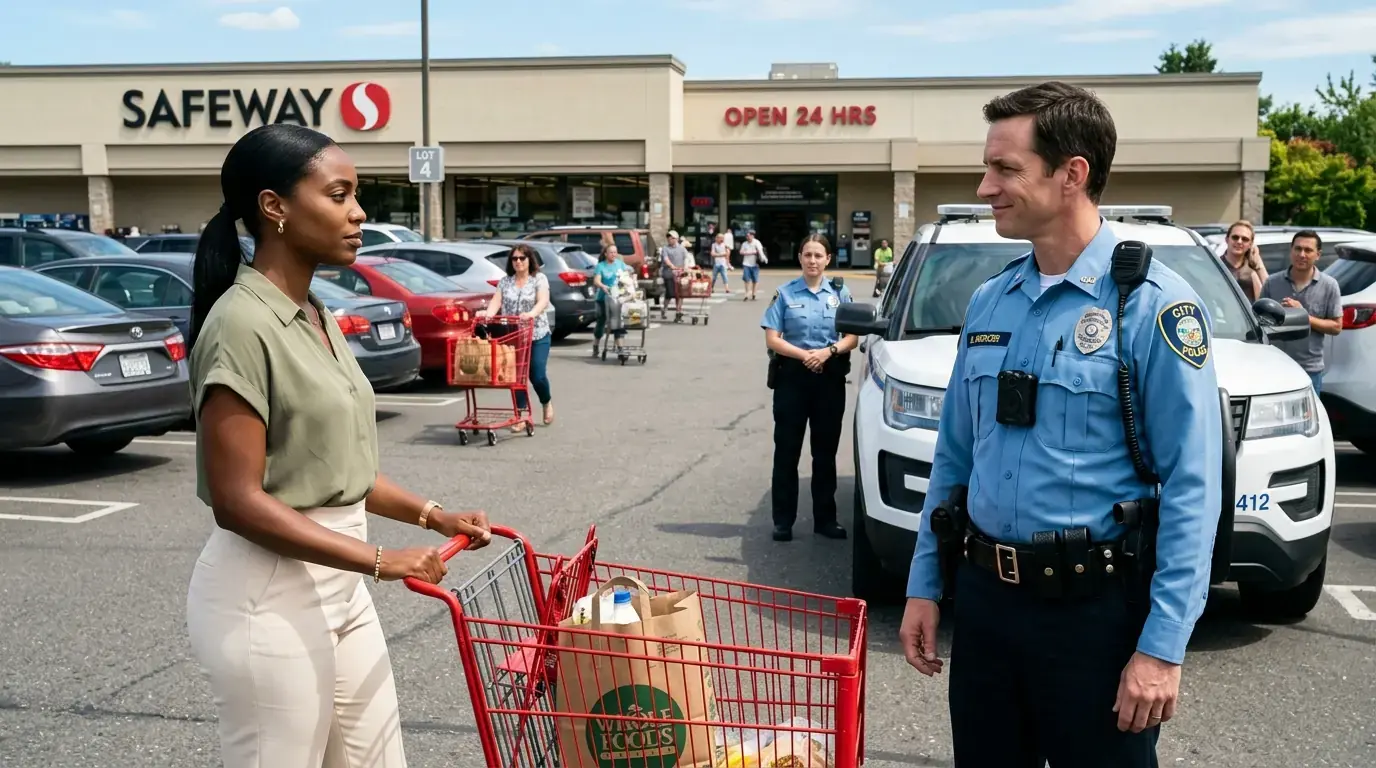
Police Thought They Found an Easy Arrest at the Store — Then They Opened the Badge Wallet in Her Bag
⏱️ 1 min read 27/08/2026 15:49
I parked beside the pond.
The afternoon was quiet.
I walked to the eastern rise.
The oak trees were still there.
I placed my hand against one of the trunks.
It had grown considerably since my grandfather and I planted it.
I remembered him telling me:
“Trees don't care about deadlines.”
I smiled.
Karen had wanted five hundred houses.
She had wanted streets, amenities, headlines, and recognition.
My grandfather had wanted a tree to grow.
Standing there, I finally understood which of them had built something lasting.
Almost a year after Phase Six collapsed, Karen sold her house.
I heard about it from Wade.
“She's moving.”
“Where?”
“Don't know.”
I wasn't interested.
As far as I was concerned, Karen Whitmore was part of the past.
Then one afternoon, while I was repairing a section of fence, her SUV stopped outside my gate.
I recognized it immediately.
She got out.
For once, there were no sunglasses.
No clipboard.
No navy blazer.
She looked tired.
Older.
Not defeated exactly.
But no longer protected by the machinery of the HOA.
She walked toward the gate.
I kept working.
“Ethan.”
I looked up.
“Karen.”
She stood on the other side of the fence.
For a moment, neither of us spoke.
Then she looked toward the pond.
The water was calm.
The oaks moved in the wind.
“You kept it,” she said.
“Yes.”
“I thought you might sell.”
“I didn't.”
She nodded.
“You could still sell.”
I almost laughed.
“Is that why you're here?”
“No.”
But she didn't immediately explain.
She stared toward the pond.
“I used to think this place was wasted.”
I put down the fence tool.
“What do you think now?”
She didn't answer.
Instead, she asked:
“Do you know what this land is worth?”
“Yes.”
“That kind of money could change your life.”
“It already has.”
She looked at me.
“You know what I mean.”
“I do.”
She was quiet.
Then she said:
“I was trying to build something.”
I shook my head.
“No.”
Her expression tightened.
“You don't know what I was trying to do.”
“I know what you did.”
“That isn't the same thing.”
“No,” I said. “It isn't.”
She looked away.
“I believed Briarwood needed more housing.”
“Then you should have found land that was for sale.”
“We needed to grow.”
“You could have asked me.”
“I thought you would refuse.”
There it was.
The real answer.
I stared at her.
“You decided my answer before you ever asked the question.”
She didn't respond.
“You knew I might say no.”
She swallowed.
“And that was the problem.”
“No,” I said.
“That was your problem.”
She looked at the ground.
“People needed homes.”
“Then they deserved honesty.”
Her eyes lifted toward me.
For a second, I thought she might apologize.
She didn't.
Instead she said:
“You know, if you ever change your mind, Horizon isn't the only company interested.”
“I know.”
“They still ask about the property.”
“I know.”
“You could make a fortune.”
I looked at the pond.
“My grandfather planted those oaks with me.”
Karen said nothing.
“He taught me to fish here.”
Still nothing.
“He kept this land when everyone told him selling would be easier.”
I paused.
“I am not saying I will never sell anything.”
Karen watched me.
“But I will never sell because someone else decided they were entitled to my property.”
Her expression changed.
Not anger.
Something closer to disappointment.
Perhaps she had finally realized that the ending wasn't going to bend toward her.
She turned toward her SUV.
Then stopped.
“Ethan?”
“Yes?”
“I really did think I was helping.”
I looked at her.
“Maybe that's what made it dangerous.”
She stared at me for several seconds.
Then she nodded once.
She got into the SUV.
I watched her drive away.
I never saw her again.
After the lawsuits ended, I made one final decision.
I created a family trust for the property.
The rules were simple.
No sale without independent review.
No development agreement without independent counsel.
No easement without recorded terms.
No surveys without permission.
No access without authorization.
No marketing.
No assumptions.
Everything had to be documented.
I didn't do it because I hated development.
I didn't.
Communities grow.
Families need homes.
Businesses need land.
Change is part of life.
But there is a difference between development and entitlement.
Development asks.
Entitlement assumes.
Development negotiates.
Entitlement announces.
Development respects ownership.
Entitlement treats ownership as an inconvenience.
Karen had chosen entitlement.
And it had cost everyone.
The following spring, I stocked the pond again.
I brought my niece with me.
She carried a fishing rod almost as tall as she was.
“Are there fish?”
“There are.”
“Big ones?”
“Some.”
“How big?”
I thought about my grandfather.
“Big enough to make you tell stories afterward.”
She smiled.
We walked down to the water.
She cast.
The line tangled in a branch.
She tried again.
It tangled again.
On the third attempt, the hook landed in the grass behind us.
She turned around.
“Uncle Ethan?”
“Yes?”
“I think I'm bad at this.”
7 Part