THE OLD MAN WHO WALKED INTO THE BOARDROOM
⏱️ 1 min read 26/08/2026 19:49
The scheme depended upon a network of people who either benefited from it or were afraid of becoming the next target.
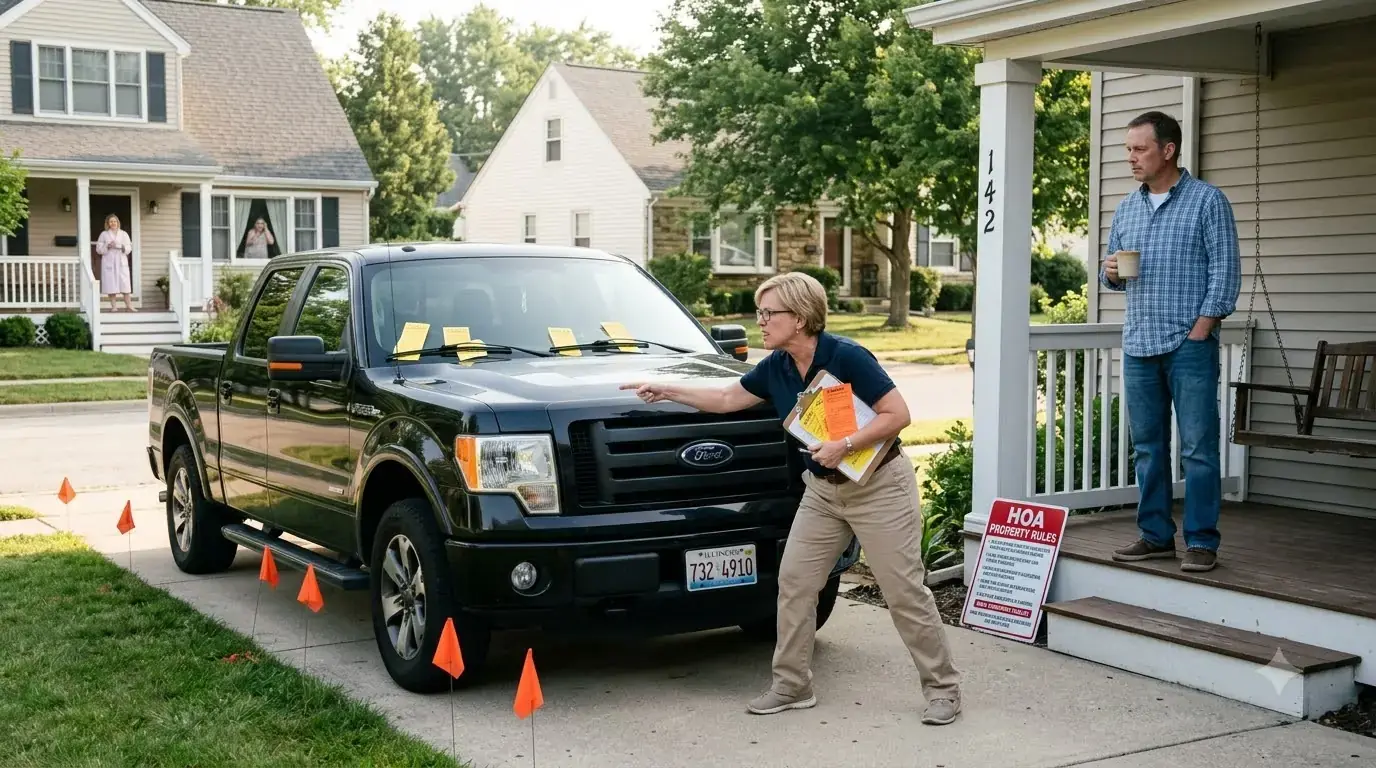
The HOA's authority had become a tool.
Rules became weapons.
Fines became leverage.
Complaints became intimidation.
And fear became a business model.
The case took more than a year to resolve.
There was no dramatic courtroom confession.
No single day when everything ended.
There were months of document review.
Forensic accounting.
Civil claims.
Property disputes.
Title investigations.
Victim interviews.
Negotiations among prosecutors, homeowners, lenders, and attorneys.
The evidence eventually showed that the Crowleys had manipulated the association for years.
Vanessa pleaded guilty to forgery, false reporting, conspiracy, and multiple fraud charges.
Grant pleaded guilty to racketeering-related state charges, real-estate fraud, and theft.
Both received prison sentences and restitution orders.
Hawthorne Property Renewal entered receivership.
Several former homeowners received financial settlements.
One family recovered a significant portion of the profit made from reselling their property.
Another homeowner decided never to return to Hawthorne Glen.
Nathan understood why.
Some places carried memories that could not be repaired by new paint.
The arrest of Vanessa Crowley did not magically fix Hawthorne Glen.
The neighborhood still had broken sidewalks.
The clubhouse still needed repairs.
Storm-water drainage still had to be maintained.
Insurance premiums still had to be paid.
And the HOA still had legitimate responsibilities.
Nathan opposed dissolving the association immediately.
An HOA was not automatically corrupt because one board had abused its authority.
The residents needed better leadership, not necessarily no leadership.
A new election was held.
Residents who had once been afraid to speak began attending meetings.
The new president was Ruth Ellison, a retired school principal.
Vanessa had once threatened Ruth over a cracked driveway.
Ruth remembered exactly how it had felt.
At the first meeting under the new board, she stood before the residents.
“An HOA should maintain common property,” she said.
“It should not manufacture fear.”
The room was silent.
Then someone began clapping.
Others joined.
The vote approving the new rules was unanimous.
The bylaws were rewritten.
No board member or close relative could hold a financial interest in a company purchasing property inside Hawthorne Glen.
Fines required photographic evidence.
Residents received written notice.
Appeals had to be independent.
Entry into private residences required consent or lawful authority.
Financial statements would be reviewed annually by an outside accountant.
Meetings would be recorded.
Records would be accessible to homeowners.
Most importantly, nobody was permitted to treat the HOA president as a private government.
Sergeant Dalton and Officer Reeves received commendations for how they handled the confusing stolen-vehicle call.
Detective Carla Monroe received the county's investigative-service award.
Nathan declined public recognition.
He had not solved the case.
He had documented what happened.
Then he had stepped aside and allowed independent investigators to do their jobs.
At the award ceremony, Carla mentioned him anyway.
“He showed something important,” she said.
“Sometimes the strongest thing a person can do is refuse to use power that belongs to someone else.”
Nathan listened from the back of the room.
He hated speeches.
So he left early.
The following fall, Owen left for the University of Georgia.
Before moving into his dorm, father and son took the Mustang through the North Georgia hills.
They stopped at a roadside diner.
Owen ordered pecan pie and ate only half.
Nathan drank coffee.
Outside, the pearl-white Mustang cooled beneath the afternoon sun.
Owen looked through the window.
“Mom would have enjoyed the salute.”
Nathan smiled.
“She would have laughed until she couldn't breathe.”
“She would have said you were being dramatic.”
“She often said that.”
They drove to the cemetery afterward.
Nathan parked near Elise's grave.
Both windows were open.
For almost an hour, neither man spoke.
The Mustang remained in the family.
Nathan drove it on the first Saturday of every month.
Sometimes Owen joined him.
Sometimes Nathan went alone.
The brass plaque above the glove compartment caught sunlight whenever the car turned south.
FOR MY TWO FAVORITE MEN.
Nathan ran his fingers over the letters.
The Mustang had survived rust.
Abandonment.
Broken parts.
Four years of restoration.
A dishonest HOA president.
A fraudulent ownership claim.
And a police investigation.
But that was not why Nathan valued it.
The car mattered because of time.
Four years of evenings.
Owen's first successful weld.
Elise choosing paint.
Nathan rebuilding the transmission while Elise stood behind him reading instructions and correcting him.
Arguments.
7 Part