The Race Against Time: How James Bedford Became Cryonics’ First Success Story
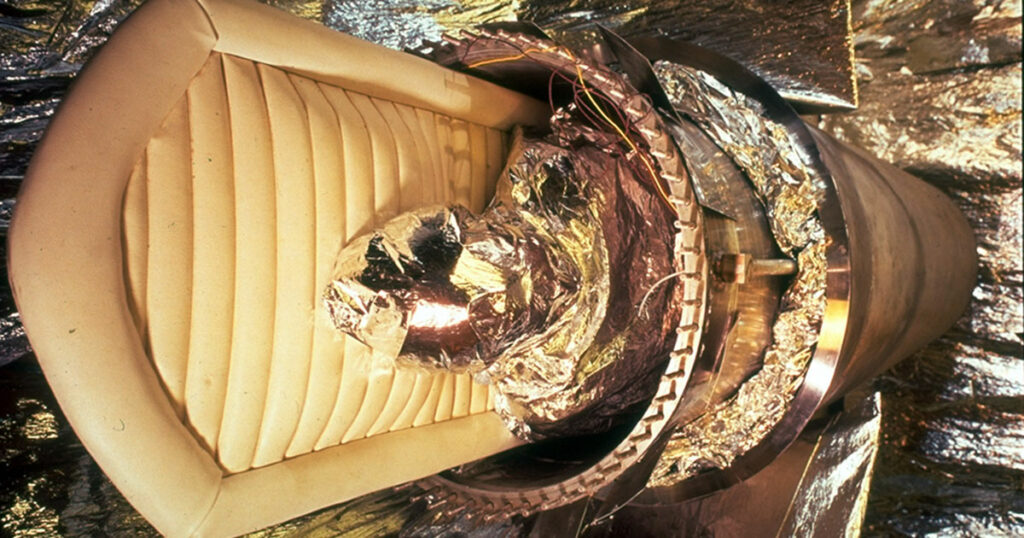
The doctors from the Cryonics Society had just seven minutes after James Bedford’s death to initiate the first phase of his unprecedented journey into the future. Artificial respiration was immediately applied to maintain oxygen flow to his brain, while dimethyl sulfoxide was infused into his veins to replace his blood and prevent ice crystals from damaging his organs during freezing.
Once stabilized, Bedford’s body was carefully placed on ice inside a custom-built, metal, tube-shaped capsule—designed, surprisingly, by a Phoenix wigmaker named Ed Hope. From there, the capsule was transported by hearse from a Los Angeles mortuary to a cryonics facility in Arizona.
“We were sworn to secrecy on this,” an anonymous mortuary worker later revealed to the Los Angeles Times. “We didn’t look into the container, but a doctor told us it held a body.”
Days later, the Cryonics Society proudly announced that the first human had been successfully cryopreserved using liquid nitrogen, ready to be revived once a cure for cancer—and the means to reverse death—was discovered.
This milestone came after two earlier failed attempts. In one case, a San Francisco schoolteacher had been dead too long before cryonics workers arrived, rendering his brain likely irreparable even if revival became possible. In another, a California woman had unknowingly been embalmed before freezing, a discovery that led to her being thawed and buried in the traditional manner.
Despite these setbacks, James Bedford’s successful preservation marked the beginning of a bold and controversial chapter in humanity’s quest to defy mortality.
Cryonic Suspension: What Happens When You Choose to Freeze Your Future?

If you decide to undergo cryonic suspension, here’s what you can expect. First, you’ll need to become a member of a cryonics organization, typically paying an annual membership fee (around $400 per year). Then, when your heart stops beating and you’re officially declared legally dead, the cryonics process begins.
An emergency response team from the facility will spring into action, stabilizing your body to maintain minimal brain function. Oxygen and blood circulation are artificially sustained to delay cellular damage, while your body is packed in ice and injected with heparin—an anticoagulant that prevents blood clotting during transportation. A specialized medical team will then await your arrival at the cryonics facility.
Once at the facility, the true preservation process begins. Cryonics isn’t as simple as placing a body into a vat of liquid nitrogen. If water inside your cells were to freeze, it would expand and cause the cells to rupture, rendering revival impossible.
To prevent this, cryonics technicians carefully replace the water in your cells with a glycerol-based chemical mixture known as a cryoprotectant—essentially a human antifreeze. This mixture prevents the formation of damaging ice crystals and allows tissues and organs to endure extremely low temperatures.
The process, known as vitrification, involves deep cooling without ice formation, placing your cells into a glass-like, suspended state. In this state, you’ll remain preserved—waiting for a future where science might finally unlock the secrets of revival and restoration.
The Final Freeze: How Cryonic Preservation Locks You in Time
Once the water in your body is replaced with a cryoprotectant, your body is gradually cooled on a bed of dry ice until it reaches -130°C (-202°F). At this temperature, the vitrification process is complete, and your tissues are in a glass-like, ice-free state.
Next, your body is carefully placed into an individual aluminum container, which is then inserted into a large, insulated metal tank filled with liquid nitrogen. The temperature inside the tank remains at an astonishing -196°C (-320°F). Interestingly, your body is stored head-down—a precaution designed to ensure that, in the unlikely event of a leak, your brain stays submerged in the freezing liquid.
Cryonics is far from inexpensive. Whole-body preservation can cost upwards of $150,000. For those seeking a more budget-friendly route into the future, neurosuspension is an option. For around $50,000, only your brain is preserved, with the hope that future technology will be able to clone or regenerate a body to match.
In storage facilities, each patient—whether whole-body or neurosuspended—is placed in their own aluminum container, which is housed in a “neuropod” or “wholebody pod.” These pods are then submerged together in a shared tank of liquid nitrogen.
So, if you opt for cryonic suspension, you won’t be entirely alone. Multiple patients—full bodies and isolated brains alike—are often stored together in the same towering, nitrogen-filled tanks, silently awaiting a scientific breakthrough that could one day bring them back to life.
Why America’s Billionaires Are Betting on Freezing Themselves to Cheat Death

More than 5,500 people have signed up for cryogenic preservation, and around 500 bodies are already in storage, suspended in liquid nitrogen and waiting for a scientific breakthrough.
According to Bloomberg, wealthy Americans are taking a bold and radical approach to defy mortality: freezing their bodies in hopes of revival in a future where medical technology can cure the ailments that ended their lives.