But the preservation doesn’t stop with their bodies—it extends to their wealth. Lawyers have started crafting “revival trusts,” a legal mechanism ensuring that when these individuals return to life, their fortunes remain intact and ready to fund their second chapter.
For these billionaires, cryonics isn’t just a gamble on future science—it’s an investment in immortality, both physical and financial.
Can Cryonically Frozen Bodies Ever Be Revived?
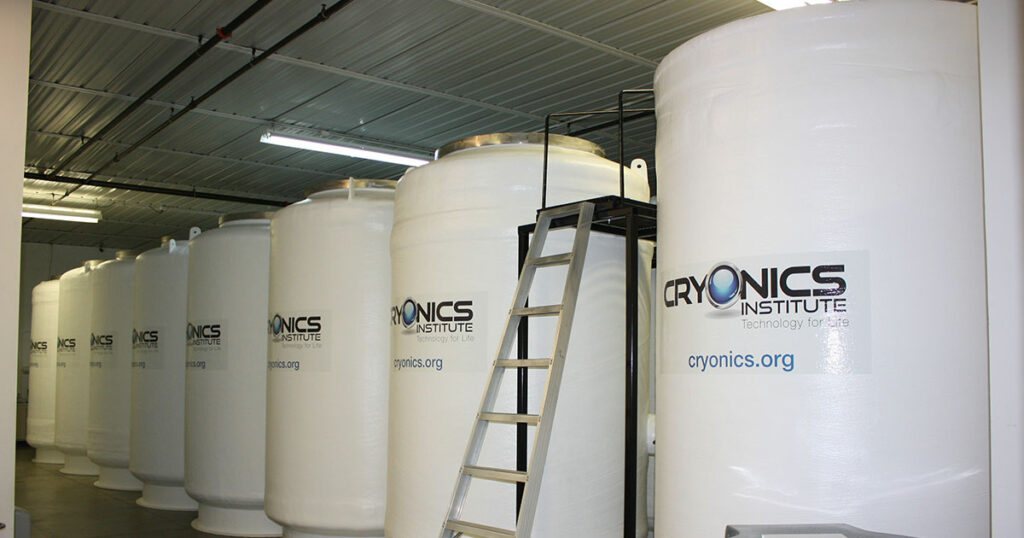
The question of whether cryopreserved bodies can ever be revived remains one of science’s biggest unknowns. As of now, medical technology cannot reverse the cryopreservation process or repair the cellular damage that can occur during freezing and storage, according to MSN.
However, supporters of cryonics remain optimistic. They believe that future advancements in nanotechnology and regenerative medicine could one day make it possible to repair cellular damage, revive preserved bodies, and even cure the diseases that initially caused death.
The Department of Anatomy at AIIMS Rajkot echoes this sentiment, suggesting that future breakthroughs might allow scientists to reverse the effects of preservation and address the root causes of death. Yet, despite the hopeful projections, the possibility of revival remains purely speculative—a question science has yet to answer.
Why Choose Cryonics Without a Guarantee of Revival?

For many, cryonics represents a glimmer of hope—a chance to extend life, witness future advancements, and possibly see a world where terminal illnesses and aging are curable. While it’s far from a guarantee, the possibility of a second chance at life is enough to convince some, particularly the wealthy, to invest in this futuristic gamble.
Currently, over 5,500 people have signed up for cryogenic preservation, and about 500 bodies are already stored in liquid nitrogen chambers, awaiting a scientific breakthrough.
One of those planning to join them is Steve LeBel, a 76-year-old retired hospital executive from Michigan, as reported by Bloomberg. LeBel has spent a year searching for a financial trust model that could endure for centuries. He intends to allocate $100,000 into a revival trust, with the remainder of his estate going to his family and foundation. His goal is to ensure there’s enough money left to cover the costs of a potential resurrection process.
“I want to figure out a solution; otherwise, I’ll be in there with my fingers crossed, hoping there’s money left over, 200 years from now, to pay for the resurrection process,” LeBel explained.
However, not everyone shares his optimism. George Bearup, a senior legal trust adviser at Greenleaf Trust, remains skeptical. “How do you draft for something that could take place 1,000 years from now? Who knows what the rules will be?” he questioned.
The Big Unknown: When Might the Frozen Wake Up?
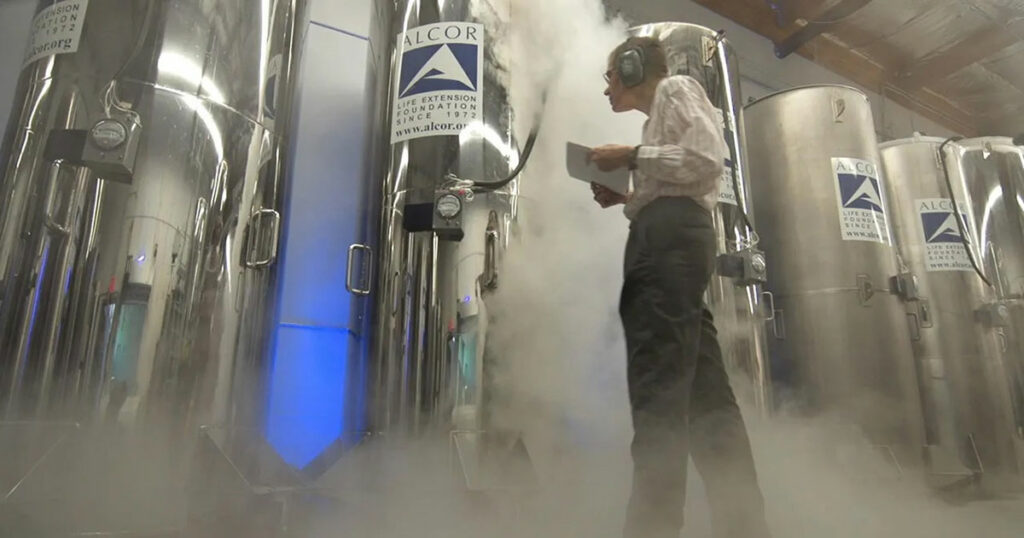
The most pressing question surrounding cryonics remains: When might a successful revival actually happen? Hundreds of people have opted to be frozen, their metal capsules marked not with an expiration date, but with an open-ended question.
“I think 50 years is probably too soon because that’ll fly by quicker than we expect, and 200 years feels like a long time when you consider how far we’ve come since the Industrial Revolution,” says Gibson. “So, somewhere in that window seems plausible.”
But whether you’ll want to wake up sometime between 2069 and 2219 is an entirely different question. By the year 2100, the United Nations projects the world’s population will swell to 11.2 billion. The planet might feel a little crowded. Teenagers of the future may seamlessly navigate whatever replaces Instagram on their iPhone SXXX with elongated, hyper-flexible thumbs, while you—with your quaint, 21st-century mindset—could feel like an antique artifact on display.
And then there’s loneliness. Emerging into a distant future where everyone you knew is long gone might feel isolating. Fortunately, some cryonics companies, like Russia’s KrioRus, have considered this scenario. They offer clients the option of preserving their pets alongside them—a comforting, if slightly surreal, solution to an uncertain awakening.
But who are some people that have chosen to freeze their bodies until times unknown?
Frozen in Time: The Strange Afterlife of Baseball Legend Ted Williams

When baseball icon Ted Williams passed away on July 5, 2002, his legacy seemed set in stone. Known as one of the greatest hitters in baseball history, Williams left behind a storied career, countless records, and the eternal admiration of sports fans worldwide. However, his story didn’t end with his death. Instead, it took an unusual and controversial turn—a turn that led him to be preserved in a 10-foot-tall, stainless steel cryonic storage container at the Alcor Life Extension Foundation in Arizona, the world’s largest cryonics facility.
The Final Resting Place—or Not
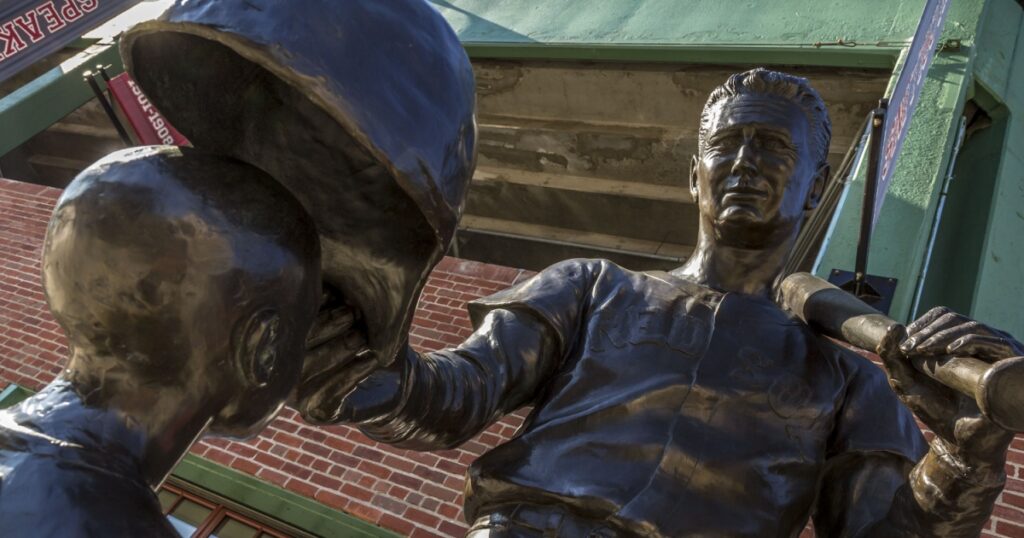
Ted Williams, also known as “The Splendid Splinter,” was a hero to millions. Yet, his final resting place is not under a headstone but inside a futuristic cryogenic chamber filled with liquid nitrogen, where temperatures are kept at an icy -196°C (-320°F). According to reports, his head and body are stored separately—his head in one smaller container and his body in another larger tank. This arrangement isn’t science fiction; it’s cryonics, the controversial science of freezing humans in the hope that future medical advancements might one day allow them to be revived.