But one challenge, in particular, stands out in his worldview: death itself.
In a recent interview on the Honestly with Bari Weiss podcast, Thiel was asked a question that has haunted humanity for millennia: Can we conquer death? And, perhaps more importantly, should we even want to? His answer was characteristically direct: “We haven’t even tried. We should either conquer death or at least figure out why it’s impossible.”
For Thiel, the fight against death isn’t just a scientific question—it’s a cultural and ideological one. Why, he seems to ask, do we accept mortality so passively? Why don’t we at least attempt to defy it?
A Billionaire’s Bet on Cryonics
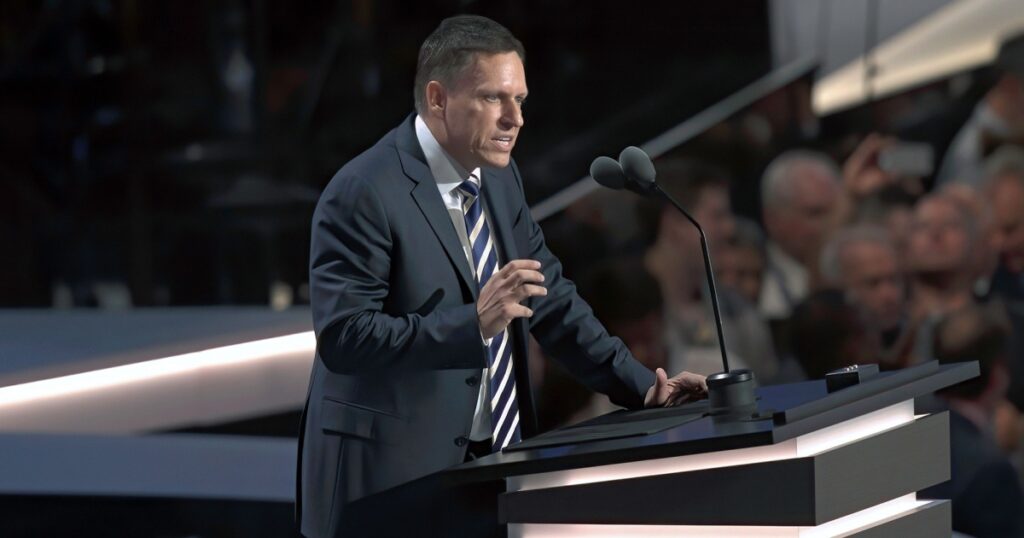
In the same interview, Thiel confirmed a long-standing rumor: he has signed up to be cryonically preserved after his death. The goal? To be brought back to life in a future where science has advanced far enough to reverse death and cure whatever ailment led to his passing.
However, Thiel approaches this not merely as a personal insurance policy against mortality, but as something more significant. “I think of it more as an ideological statement,” he admitted. “I don’t necessarily expect it to work, but I think it’s the sort of thing we’re supposed to try to do.”
For Thiel, cryonics isn’t just about self-preservation; it’s about making a statement. It’s about pushing society to confront its resignation in the face of death.
This ideological stance isn’t new for Thiel. In a 2014 interview with The Telegraph, he articulated his philosophy about death in stark terms: “You can accept it, you can deny it, or you can fight it. I think our society is dominated by people who are into denial or acceptance, and I prefer to fight it.”
The Culture of Acceptance vs. The Drive to Fight
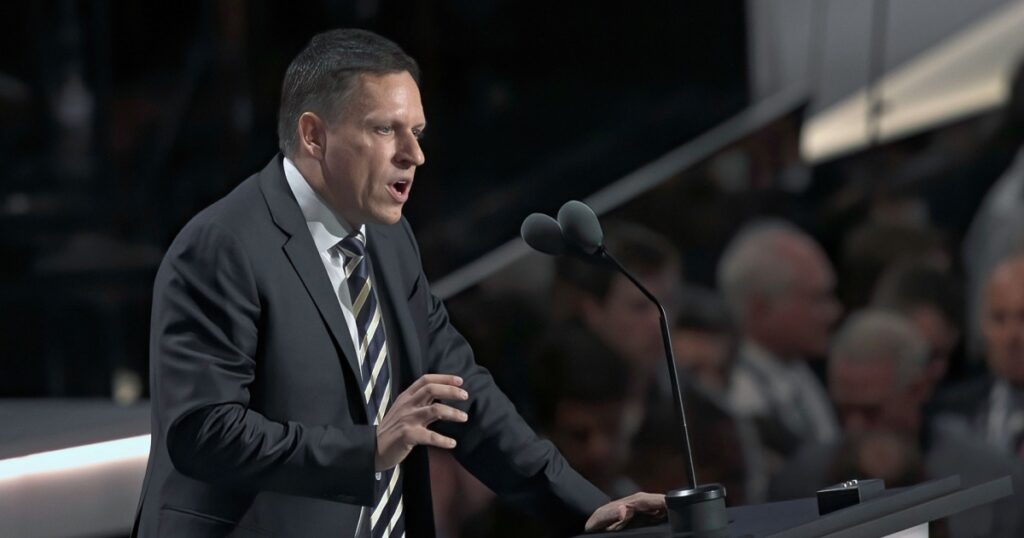
Thiel’s critique isn’t just aimed at the scientific community; it’s aimed at society as a whole. In his view, humanity has grown passive about its mortality. For centuries, death has been seen as an inevitable endpoint, a final curtain call that no one can escape. Religions, philosophies, and cultural narratives have all found ways to reconcile humanity with its finite nature.
But Thiel sees this acceptance as a failure of imagination and ambition. To him, science and technology should be tools to confront and potentially defeat death, not merely to delay it or make it more comfortable.
This belief aligns with a growing movement among Silicon Valley elites who view death not as an immutable fact, but as a technical problem—one that can, at least in theory, be solved. Thiel is not alone in his stance. Other tech visionaries, such as Google co-founder Sergey Brin and Amazon’s Jeff Bezos, have invested heavily in anti-aging research and biotechnology startups focused on extending human lifespan.
Cryonics: Science, Hope, or Fantasy?

Cryonics, the process of freezing a person’s body (or brain) after death in the hope of future revival, remains one of the most controversial frontiers of science. Supporters believe that medical advancements in nanotechnology, cellular repair, and biotechnology will eventually allow scientists to reverse the damage caused by freezing, cure the original cause of death, and bring people back to life.
Critics, however, see cryonics as little more than expensive pseudoscience. They argue that the freezing process itself causes irreversible damage to tissues and cells, making revival practically impossible. Furthermore, even if revival becomes technically feasible, there are ethical and philosophical questions about whether a revived person would truly be the same individual or merely a reconstructed version.
Yet, for Thiel and others like him, cryonics isn’t necessarily about certainty—it’s about possibility. It’s about creating a chance, however slim, for a future where death isn’t the end of the story.
The Ideological Statement of Cryonics

Thiel’s approach to cryonics is deeply tied to his broader worldview. For him, the act of signing up for cryonic preservation is not just a personal choice—it’s a public declaration. It’s a challenge to society to stop passively accepting death as inevitable and instead start asking harder questions: What if death isn’t final? What if we’re just not trying hard enough to solve this problem?
In a sense, Thiel’s decision to be preserved after death is less about whether the science works today and more about signaling a cultural shift. It’s about planting a flag in uncharted territory and saying, “We should be trying.”
It’s a provocative stance, but it’s one that has historical parallels. Humanity has always been driven by those willing to bet on the impossible—the explorers who crossed oceans when everyone else thought they’d fall off the edge of the world, the inventors who built flying machines when the idea of human flight was laughable, the scientists who believed in cures for diseases that once seemed invincible.
The Future of the Fight Against Death

So, will Peter Thiel ever wake up in a distant future, revived by advanced technology and cured of whatever ailment claimed his life? No one knows. Cryonics is, at best, an uncertain gamble.
But perhaps the real impact of Thiel’s cryonic bet isn’t about whether it works—it’s about what it represents. It’s a statement against complacency, against passivity, and against the assumption that death is an immovable wall we must all eventually hit.